Magazine
Why your boiler switches on by itself with the heating off
If the boiler starts at night with heating off, it may not be a fault: how it works and what it needs to act.

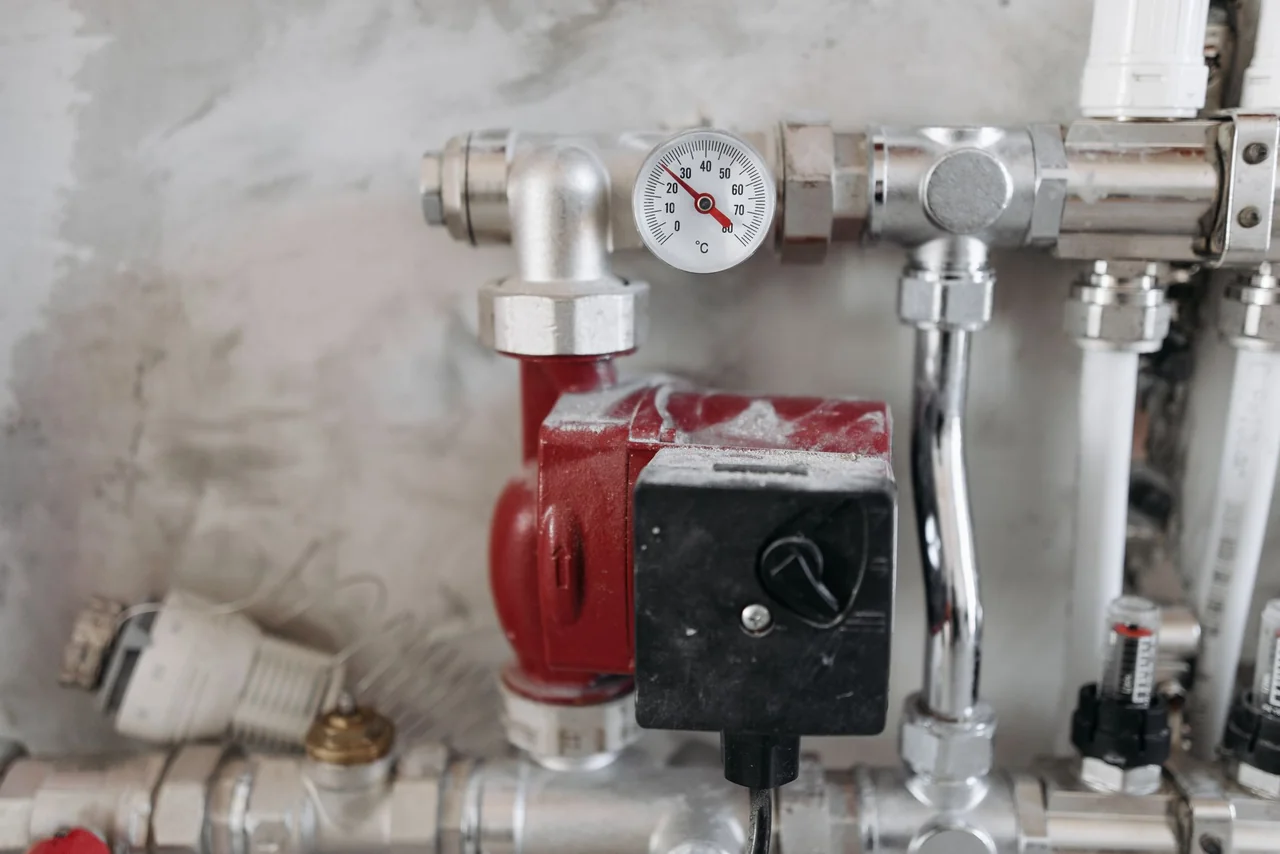
Image: Pavel Danilyuk / Pexels
Many wall-mounted gas boilers have a protection that switches them on by themselves, with the heating off, when the water in the circuit gets cold. On the Fondital Tenerife Condensing Next it starts when the sensor reads the water at 5 °C and continues until it reaches 35 °C or 20 minutes have passed; on the Saunier Duval Thelia Condens and Semia Condens the pump starts at 12 °C and the burner at 7 °C. This is the boiler frost protection function, and it requires the boiler to stay plugged in with the gas open.
So if your boiler starts up in the early hours on frosty nights, it is probably not a fault. The appliance switches on so the water inside does not freeze, and switches off once it has warmed up.
Frosty nights: lows around 0 °C from 26 to 28 November
According to the Aemet municipal forecast issued on 24 November, Burgos, Soria and Ávila could see lows of 0 °C on Thursday 26 and Friday 27 November. On Friday 27 Valladolid would reach 0 °C and Madrid 1 °C, and Teruel would drop to -2 °C, returning to 0 °C on Saturday 28. This is a forecast that could still change.
With temperatures around 0 degrees the boiler may trigger the protection even if it is not freezing inside the house, because it is enough for the water in its circuit to get very cold. This happens mostly if it is located in a utility porch, on a terrace or in a laundry room, or in a flat that is left empty for days.
What temperature it starts at: Fondital and Saunier Duval
In many models the boiler monitors the temperature of the water in the heating circuit, not the air temperature in the house. When it falls below a threshold, it starts. Each manufacturer sets its own thresholds, which are listed in the manual for each model, in the section on frost protection.
According to the user manual for the Fondital Tenerife Condensing Next, when the sensor reads the water at 5 °C the boiler switches on at minimum power and continues until it reaches 35 °C or 20 minutes have passed. The function is active with the boiler set to OFF, in winter mode and in summer mode. If the burner, the part that produces the flame, cannot ignite because there is no gas, only the circulator, the pump that moves the water through the pipes, starts up.
On the Saunier Duval Thelia Condens and Semia Condens, according to the Semia Condens user manual, the protection has two stages. The pump starts when the water drops to 12 °C and stops when it reaches 15 °C. If the water keeps cooling, the burner ignites at 7 °C and switches off at 35 °C. That is why the first noise in the early hours may be the pump and not the flame.
With a Saunier Duval MiPro thermostat, the protection also monitors the outdoor temperature: below 4 °C the controller switches the boiler on and keeps the home at a minimum of 5 °C.
How much gas it uses when it starts by itself
The manuals cited do not state how much gas the boiler burns on each start, so the cost depends on the model and on the hours of cold.
As a price reference, under the last-resort gas tariff a kWh costs 5.25 cents before tax up to 5,000 kWh a year, according to the resolution published in the BOE, in force since 1 October 2026. With November’s taxes it works out at about 6.64 cents per kWh.
Switched off at the button it is protected; unplugged, it is not
The pump runs on electricity: the boiler needs power and gas to protect itself. According to the Saunier Duval manual, in standby mode, switched off at the button but plugged in, the protection stays active as long as the power is not cut. According to Fondital, with the appliance disconnected and the gas shut off, the frost protection function does not operate.
Unplugging the boiler to save money on a frosty night leaves it defenceless, and without gas only the pump is left. A power cut has the same effect for as long as it lasts.
What frost protection does not cover and what manufacturers ask for when it freezes
The function protects the boiler, not the whole installation; Fondital says so explicitly. Saunier Duval warns that the domestic hot water circuit, the pipes that go to the taps, is not protected by the boiler. The manual for the Junkers Condens 2300i W states that an installation in a room without frost protection may freeze if it is switched off. If the boiler locks out, for example because of low pressure in the circuit, Fondital only guarantees that the pump keeps moving the water.
In case of frost, Saunier Duval asks that the installation keeps running and that all rooms are heated sufficiently; it only allows the appliance to be left out of service if no frost is expected. Junkers suggests keeping the heating running continuously, with the water flowing to the radiators at a minimum of 30 °C.
If you go away for a few days or the house is left empty: antifreeze and installer
If you will be away for several days, Saunier Duval says to leave the boiler on standby or to programme the absence on the thermostat, and to check that it is getting power and gas. For a longer absence it recommends that an installer drains the installation or adds a heating antifreeze. Fondital asks you to disconnect the power and shut off the gas if the appliance will not be used for a long time, but if there is a risk of frost the installation must contain a specific heating antifreeze, never car antifreeze. It advises against draining the installation because it could be damaged.
Heating antifreeze, normally propylene glycol based, protects the water in the circuit down to -40 °C with the most concentrated mixes, even if the electricity or gas is cut. Products formulated for domestic heating include corrosion inhibitors to protect materials such as steel, copper and aluminium. Automotive antifreeze is not formulated for these circuits and can damage the boiler’s gaskets, seals and components.
It is especially useful in second homes in mountain areas or very cold climates that are left empty, in homes with an unreliable electricity supply, or in installations that have already suffered a freeze. In a main home with a stable electricity and gas supply, the electronic frost protection mode is usually sufficient protection; antifreeze adds cost and complexity because the circuit has to be drained to introduce it. A second home or village house that spends the winter closed up is the case most worth checking with an installer before the frosts.
It must be added by a technician: the circuit has to be drained, the concentration calculated according to the protection required and the volume of the installation, and compatibility with the materials confirmed. Incorrect dosing can give too little protection or affect thermal performance. The concentration can become diluted over the years by top-ups of water without glycol, for example after bleeding the system, so it is advisable for the technician to check it every few years at the maintenance service. The Junkers manual asks you to check every two years that it still protects.
What to check on your boiler this week
Before the frosts, check that the boiler is still plugged in even if the display shows OFF or standby, and that the gas valve is open. Where it is mounted also matters: in a utility porch, on a terrace or in a laundry room, the protection will kick in more often.
This article contains affiliate links: if you buy through them, we earn a small commission at no extra cost to you. More information.


Why your boiler switches on by itself with the heating off

Appliance sales fall 5.2% in the third quarter

Electricity Price 26 November: 194.35 €/MWh and Key Hours

Saving Energy at Home: Habits That Cut Your Electricity Bill

How Much Electricity Does an Air Fryer Use?

No Hot Water Due to the Boiler: What the LAU Says on Landlords

Bosch Condens 1200 W: new 32/35 kW boiler and accessories

Samsung Auto Open Door: the washing machine that opens itself

New Fluorinated Gases Decree: Certificates Renewed Every 7 Years

What to Check Before Buying a Washing Machine or Fridge

 Magazine5 days ago
Washing machine smells? Clean the seal and leave the door open
- Magazine6 days ago
Pellet stove shutting down: causes and safe checks
- Magazine6 days ago
Ceramic or oil-filled radiator: running costs and differences
- Magazine7 days ago
Pellet stove won’t start: causes and safe solutions
- Magazine6 days ago
How much electricity a halogen heater uses and what it costs
- Magazine6 days ago
Ceramic hob or induction: which uses less electricity, per an expert
- Magazine4 days ago
Electric Heater and Power Strips: Plug It Into the Wall
- Magazine6 days ago
Pellet stoves without a chimney: limits and alternatives
- Magazine6 days ago
Electricity price on Saturday 21 November: 148.44 €/MWh
- Magazine6 days ago
Ducted pellet stoves: heat output, costs and limitations
- Magazine6 days ago
Burning smell from a heater: causes and when to switch it off
- Magazine7 days ago
Cooling Demand Overtakes Heating for the First Time, IEA Says


